Published in Marketing
AI-Powered Marketing: Trends in 2025

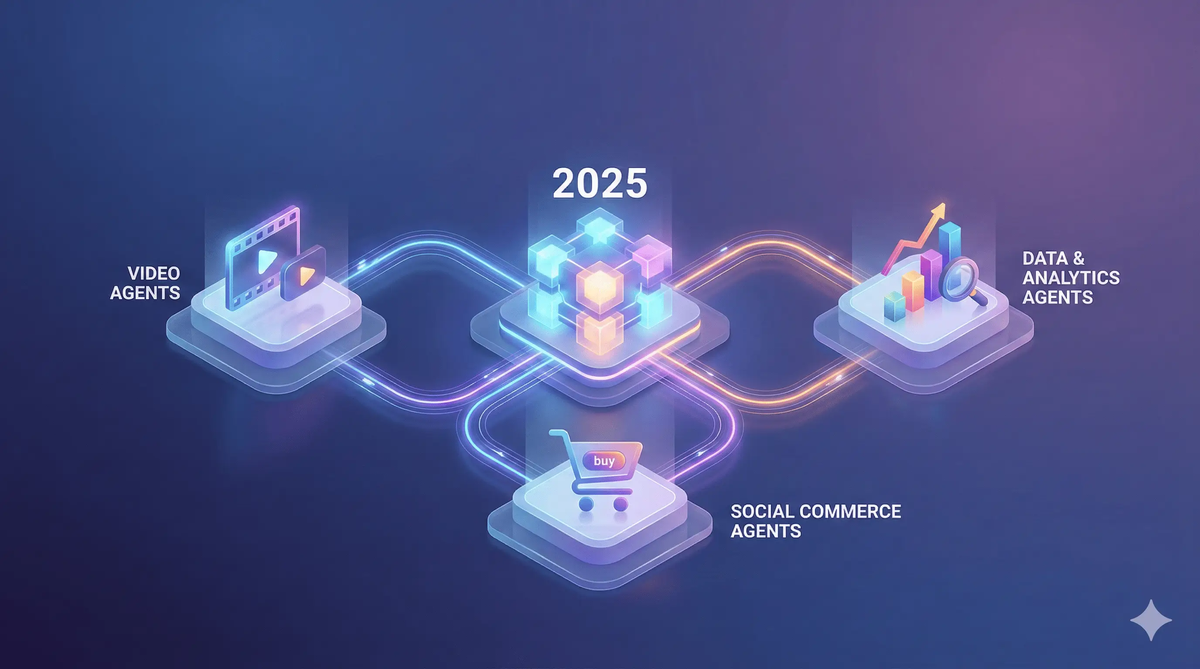
I'm writing this early December 2025, where most of us are winding down for the end of year. To be honest, it has been such a dramatic and turbulent year, that I don't think there is any winding down for most of us (yet)!.
If you folks follow what I write on our Kafkai blog, last year in January I wrote about the AI marketing trends for 2024. Coming into the end of 2025, I'm taking the time to reflect on how dramatically the AI landscape has shifted since my last piece on this topic. A lot has happened in the past twenty four months - some of it predictable, much of it surprising. Like many of you reading this, one question we all faced in 2024 was "What will AI actually deliver beyond the hype?" Now, as we end 2025, the question has evolved: "How do we make AI work sustainably for our businesses?"
Doing research for this update, I've come across some fascinating resources. The 2025 Trend Report by Trend Hunter offers some compelling insights, while Scott Clark's "The 2025 AI Roadmap for Marketers" provides a practical framework that's already proving valuable.
So let us distill them and think about the trends we can see for AI-powered marketing in 2025.
Trend 1: AI Agents and Autonomous Marketing Operations
AI Agents. That might just be the most used word we're seeing right now. My friend Marlene can never end a day without saying "AI agents" twice. I also touched a little on AI agents during my coffee discussion with Mesolitica's founder Khalil Nooh. You might find that discussion interesting too, so I invite you to read it up here.
The biggest shift from 2024 to 2025 is the move from AI assistants to AI agents. Startups like AutoGPT and AgentGPT have evolved from experimental projects into legitimate business tools that can autonomously execute multi-step marketing campaigns.
These aren't just chatbots: They're digital workers that can research competitors, draft content, schedule posts, analyze performance, and optimize campaigns without human intervention for days at a time. Salesforce's Agentforce platform exemplifies this trend, offering digital labor that can handle customer service, sales development, and marketing operations.
The key difference from 2024? These agents now have memory, can learn from past actions, and can integrate with your existing marketing stack through APIs. A small business can now effectively have a 24/7 marketing team member for less than the cost of a single ad campaign. Perhaps I will write about how you can actually do this in one of my next articles.
Trend 2: Hyper-Personalization at Scale
While 2024 introduced us to AI-generated content, 2025 is about AI-generated experiences. Platforms like Dynamic Yield and Klaviyo's AI features are now creating truly individualized customer journeys where every touchpoint - from email subject lines to website layouts to product recommendations - is dynamically generated based on real-time behavioral data.
Adobe's Real-Time CDP now integrates generative AI to create personalized content variations for millions of customers simultaneously. What used to require a team of data scientists and months of planning can now be implemented by a marketing manager in an afternoon.
Most of us will be wary with the implications to our privacy, but these systems use first-party data and federated learning, which means personalization happens without sending sensitive customer data to external servers - a critical evolution given increasing regulatory scrutiny.
Trend 3: AI-Powered Social Commerce and Shoppable Content
Social commerce has exploded in 2025, and AI is the accelerant. Meta's AI Shopping Features now automatically generate shoppable posts from product catalogs, create personalized video ads featuring user-generated content, and even negotiate with customers via direct message.
OpenAI is also partnering with major retailers such as Instacart and Target, give their users an "end-to-end" shopping experience within the ChatGPT app itself. This will of course involve agents that search, suggest and put your items in a cart for you to checkout.
TikTok's Symphony AI Suite takes this further by analyzing trending sounds, visual styles, and hashtags to automatically generate video ads that feel native to the platform. The AI can even clone your voice and likeness (with permission) to create personalized video messages at scale.
What's particularly revolutionary is the integration of AI-powered influencer marketing. Platforms like GRIN and Upfluence now use AI to identify micro-influencers whose audiences perfectly match your customer profile, predict campaign ROI before launch, and even draft collaboration proposals that feel personal rather than templated.
Trend 4: Multimodal AI - The End of Content Silos
In 2024, we had separate tools for text, images, and video. In 2025, multimodal AI systems like Google's Gemini, OpenAI's GPT-4 Vision, and Runway's Gen-3 have made these distinctions obsolete.
You can now upload a product photo, describe your target audience, and receive a complete marketing campaign: blog posts, social media graphics, video ads, email copy, and even audio scripts - all maintaining consistent brand voice and visual identity.
Canva's Magic Studio exemplifies this trend, allowing marketers to start with a simple text prompt and generate entire campaign assets across formats. The AI understands brand guidelines, color palettes, and tone of voice, ensuring consistency that would have required a full creative team in 2024.
This democratization means a solo marketer can now produce campaign assets that rival major agencies, fundamentally changing the competitive landscape for small and medium businesses.
Trend 5: Predictive Analytics and AI Forecasting
2025's AI doesn't just analyze past performance - it predicts future trends with uncanny accuracy. Tools like Google Analytics 4's predictive metrics and HubSpot's AI Forecasting can now forecast customer lifetime value, churn probability, and campaign ROI.
Salesforce's Einstein GPT has evolved to provide scenario planning. You can now say something like: "If we increase our content budget by 20% and focus on video, here's the projected impact on Q3 revenue." This moves marketing from reactive to truly proactive.
The real game-changer is integration with economic data. Platforms like GWI's AI Trend Predictor combine your internal data with macroeconomic indicators, social media sentiment, and even weather patterns to predict how external factors will impact your marketing performance.
Trend 6: Voice AI and Audio-First Marketing
Voice search and audio content have matured dramatically in 2025. ElevenLabs and Play.ht now create podcast-quality audio content from text in any voice or language, while Perplexity's voice search has become the default for younger demographics.
UK's OFCOM says that smart speaker penetration has reached 40% as an example of how smart speakers have penetrated our markets, and Amazon's Alexa for Business now offers marketing automation through voice commands. "Alexa, launch our Valentine's Day campaign" triggers a sequence of AI-generated actions across all channels.
The opportunity for SMBs is enormous: For example, you can create a weekly podcast for your niche, generate voice-optimized content for local search, or offer voice-based customer service in multiple languages without hiring people. The cost barrier has essentially disappeared.
Trend 7: Privacy-First AI and Zero-Party Data Collection
With GDPR enforcement tightening and new regulations like the EU AI Act taking effect, 2025's successful marketers have embraced privacy-first AI. Instead of covert tracking, they're using AI to make zero-party data collection engaging and valuable.
Octane AI's Shop Quiz and Jebbit's interactive experiences use conversational AI to help customers find the right products while collecting preference data transparently. Customers want to share information because they immediately see value in return.
Apple's Private Cloud Compute model is being adopted by martech vendors, ensuring AI processing happens on-device or in privacy-preserving environments. This technical shift is becoming a competitive advantage, with privacy-conscious consumers actively choosing brands that demonstrate responsible AI use.
Trend 8: AI-Powered Customer Service as a Marketing Channel
The line between customer service and marketing has blurred completely in 2025. AI customer service platforms like Intercom's Fin AI and Zendesk AI don't just resolve issues - they identify upsell opportunities, collect product feedback, and turn satisfied customers into brand advocates automatically. By the way, we use Tawk.to for our customer support platform, and they have and AI assistant too which you can train to upsell customers, although it's still not very good at it.
Drift's Conversation Cloud uses AI to have personalized conversations with website visitors, qualifying leads, booking meetings, and providing product recommendations 24/7. The system learns from every interaction, continuously improving its ability to convert visitors into customers.
What makes this a marketing trend rather than just a support tool is the data integration. These AI agents feed insights directly into your marketing automation platform, creating a continuous loop: customer question → AI response → feedback → product improvement → marketing message refinement.
Trend 9: Generative AI for Video Marketing at Scale
2024 gave us AI video tools. 2025 gives us AI video workflows. Platforms like Synthesia and HeyGen have evolved beyond simple avatar videos to complete video marketing automation systems.
You can now feed these systems a blog post and receive: a script, an AI presenter video, background visuals, subtitles in multiple languages, and social media cut-downs - all automatically generated and brand-compliant. Kapwing's AI Video Suite can even analyze your existing content library to identify clips that should be turned into standalone social videos.
The cost reduction is staggering. What cost $5,000 per video in 2024 now costs $50, enabling small businesses to maintain the consistent video presence that platforms like TikTok, Instagram Reels, and YouTube Shorts demand.
Trend 10: AI Governance and Ethical Marketing Automation
Perhaps the most mature trend of 2025 is the widespread adoption of AI governance frameworks. After the hype and experimentation of 2024, businesses now require clear policies on AI usage, content approval workflows, and ethical guidelines.
The AI Governance Framework by IBM and Microsoft's Responsible AI Standard have become templates for marketing teams. Companies are appointing "AI Ethics Officers" and implementing review processes for AI-generated content.
This isn't just risk management - it's becoming a brand differentiator. Companies that can transparently communicate their AI governance policies are winning trust, especially in B2B markets where reliability and compliance are paramount.
But There Are Of Course Challenges
While the opportunities are immense, 2025 brings its own set of challenges that marketers must navigate carefully.
Data Quality and Integration
We all know that the effectiveness of AI is entirely dependent on data quality. How many of us have met with the dreaded "incomplete or inaccurate data" report and we need to go back to clean all of them?
Unlike 2024's experimentation phase, 2025's AI tools are being integrated into core business processes. Poor data doesn't just lead to bad recommendations - it can automate bad decisions at scale. Companies are realizing they need to invest in data hygiene before AI can deliver value.
Skill Gaps and Organizational Change
The World Economic Forum's Future of Jobs 2025 reports that over 70% of employers plan to upskill their workforce and we can guesstimate that it is for them to effectively work with AI tools and future foolproof them. It's not about learning prompts anymore: It's now about rethinking entire workflows and job functions.
Junior employees are now expected to supervise AI agents. Senior strategists need to understand AI capabilities and limitations. The organizational structure of marketing teams is being rewritten, and not everyone is adapting smoothly.
Regulatory Compliance Complexity
With the EU AI Act, California's updated privacy laws, and similar regulations emerging globally, marketers must now consider legal compliance in every AI implementation. The IAPP's 2025 AI Governance Report shows that over 70% of organizations working with AI are also working on AI governance. In many of these organizations, the AI-governance responsibilities are assigned to privacy, legal & compliance, IT, data-governance or security teams, indicating cross-departmental involvement.
The challenge isn't just following rules - it's understanding how they apply to constantly evolving AI capabilities, and everyone needs to be on board. What's compliant today might not be tomorrow as AI systems become more autonomous.
Authenticity in an AI-Saturated Market
We've come to my favorite part: Authenticity.
As AI content becomes ubiquitous, standing out requires genuine human insight. The Edelman Trust Barometer 2025 reveals that as AI-generated content becomes more common, brand trust increasingly depends on authenticity, transparency and human-centred brand behaviour.
The risk is homogenization. When everyone uses the same AI tools with similar prompts, content starts to feel interchangeable. Brands that maintain authentic human voices and unique perspectives are becoming increasingly valuable.
This is in fact the core concept of what Kafkai is trying to achieve: Differentiation through clarity by understanding your business and your landscape. I've wrote about it here.
At The End Of It
At the end of it, the trends for AI in 2025 continue to be around the idea of doing more with less, but with a crucial evolution: we're moving from "AI as a tool" to "AI as a team member." I think the hype of 2024 has given way to practical implementation in 2025. There are still gaps and things sometimes fall apart when an AI does it so I don't think we're going to see AGI in 2026 or even 2027, but we're starting to find usages that are not just "good enough" but genuinely transformative for our needs.
The key lesson from 2024 was that AI doesn't replace human creativity and strategy, but it amplifies it. In 2025, the winners won't be those with the most advanced AI, but those who best integrate AI into their unique business processes while maintaining the human touch that builds trust and differentiation.
As we realize that AI works best as a collaborator rather than a replacement, we're discovering that the most powerful combination is human creativity guided by AI insights, not merely AI output approved by humans.
I think the future belongs to the augmented marketer - the professional who knows when to leverage AI and when to rely on human judgment, who can orchestrate a team of AI agents while providing the strategic direction and creative spark that only humans can offer.
If you liked this article, you might like these too
Related Articles

DMS25 Final Part: AI-Powered CRM Marketing Strategies - Data-Driven Success
This final DMS 2025 Seoul report explores AI-powered CRM marketing strategies that leverage data for personalized customer engagement, optimal messaging, and predictive analytics—with practical takeaways for businesses of any size.
DMS25 Part 1: Digital Marketing Summit Seoul 2025: Day One Insights
Attending the Digital Marketing Summit in Seoul offered a treasure trove of insights on current marketing trends, AI integration, and immersive experiences.
D2C Marketing: What It Is and How It Drives Growth
How Brands Are Winning with Direct-to-Consumer Strategies