Published in Business Community
Your Domain Is Your Brand: An Afternoon of Chakap-Chakap in Melaka

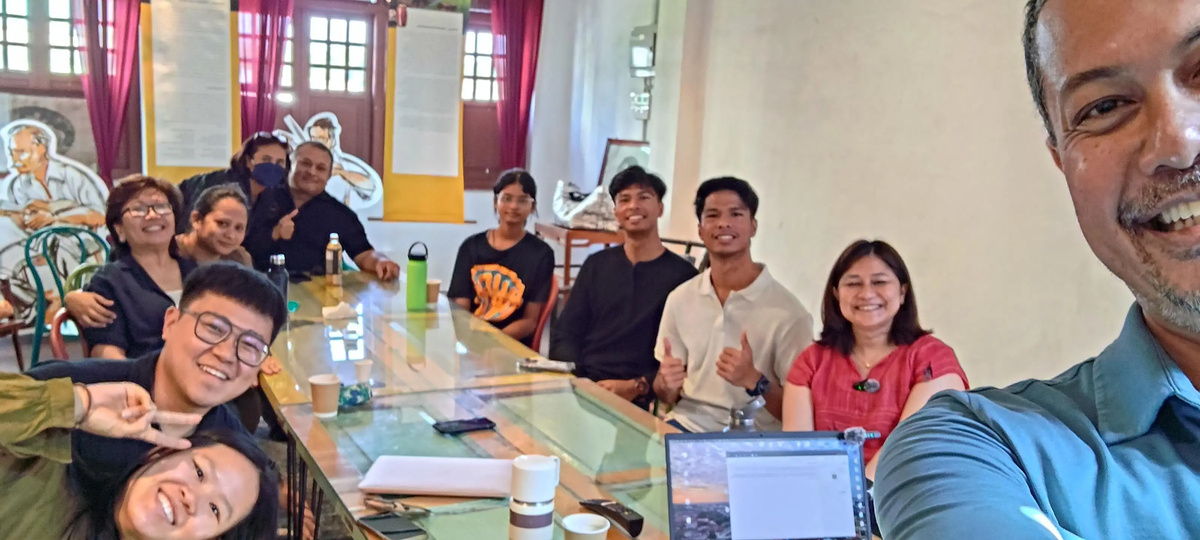
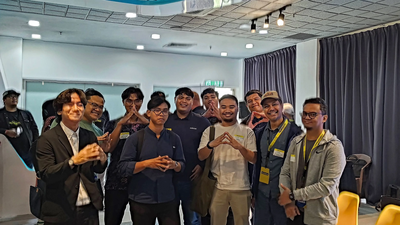
Last Saturday, 13 June 2026, I stood in front of about fourteen people on the first floor of The Lohteng, inside The Bendahari on Jalan Bendahara in Melaka. Some were students but motly small business owners, people who make things, sell things, and run their shops here in the city. We had tea, we had light snacks, and for a couple of hours we just talked.
The session was called "Your Business & My Business: A Chakap-Chakap Session": A peer-to-peer gathering for small business owners.
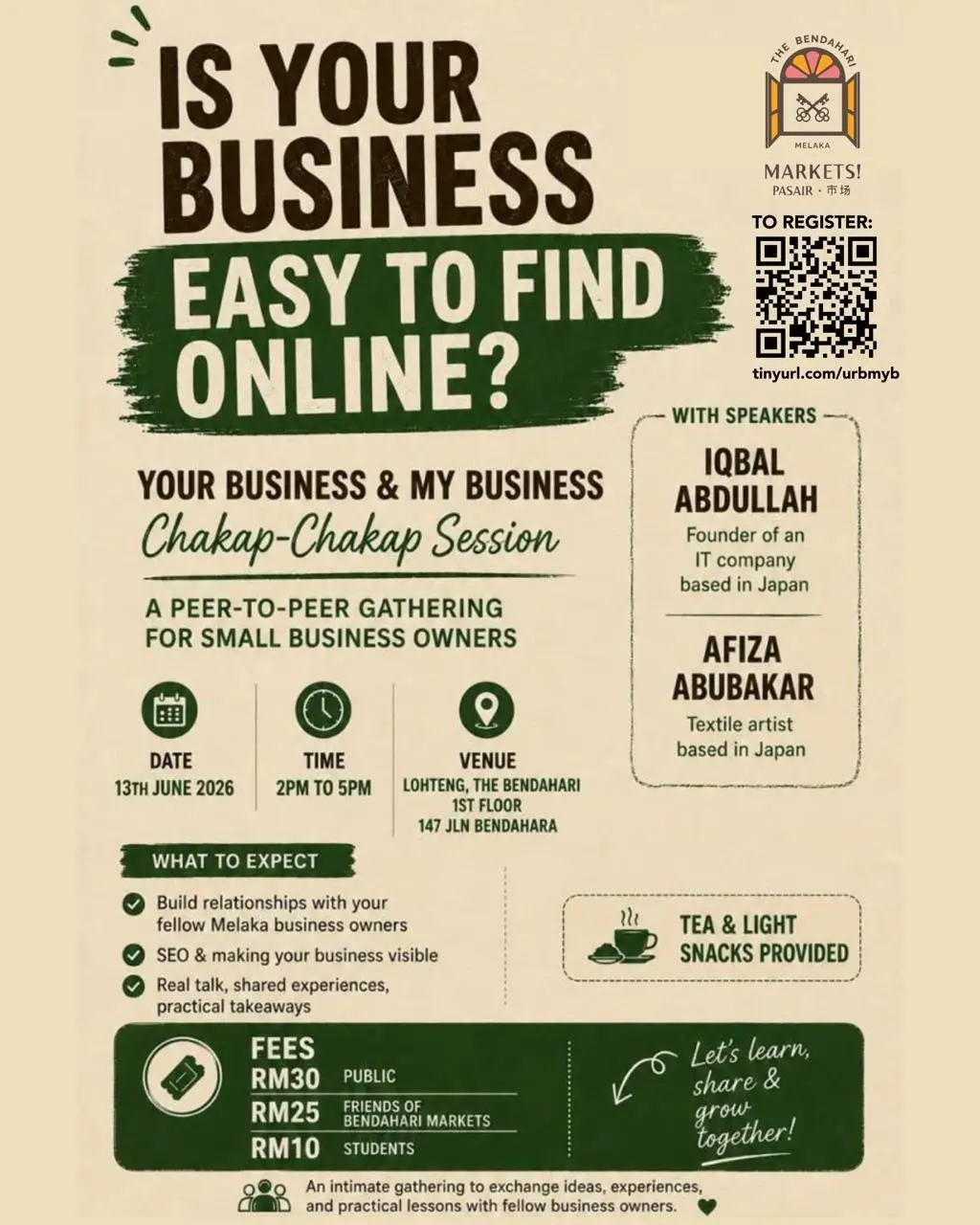
The original idea was simple: find a reason for Melaka's business owners to get together, talk honestly, and strengthen the relationships between them. As we say in Malay, untuk merancakkan Melaka — to make the community vibrant. The driver behind it was Melissa, who runs the cultural community space called The Bendahari, and her wish to mobilise the people who genuinely care about this city. My wife Afiza, a textile artist (and a Malaccan), and I offered to share our stories as a start, hoping this kind of gathering becomes a regular thing.
This is a write-up of my portion. I spoke on one unglamorous question I have spent twenty years on: when someone goes looking for you online, do they find you, and is it really you they find?
A 600-year-old idea
I started by flattering our city, and it happens to be true. Six hundred years ago, Melaka was the most important address in this region. Not the biggest. But everyone knew where it was and what it was for. A clear address and a clear purpose that is what made the fortune.
Nothing has changed except the map. Today the map lives in everyone's pocket. A visitor on Jonker Street reaches for the phone before their feet: "best Nyonya food near me," "homestay Melaka," "where to buy real pineapple tarts." In that moment, one of two things happens. They find you, clearly, and it is really you. Or they find nothing — or worse, they find a competitor sitting where your name should be.
So I asked everyone to take out their phones and Google my name with one extra word — Iqbal Abdullah Japan, or Python, or marketing — and tell me what came up. "Iqbal Abdullah" alone is a very common name; you mostly get an Indian cricketer. But add the one thing I do, and there I am, near the top. That little experiment is the whole talk in one search.
Own, don't rent
Here is the core idea I kept coming back to: the internet is land, and you should own a piece of it instead of renting forever.
Your Instagram, your Facebook page, your TikTok — you do not own any of them. You are renting a stall in someone else's mall, and the landlord sits in California. The rent is called reach: how many of your own followers actually see your post. It used to be most of them. Today a business post on Facebook reaches roughly one or two of every hundred followers, unless you pay. You built that audience; now you pay to reach the people who already chose you.
And the mall can close. Some of us in the room remembered Friendster — built in Asia, everyone was on it, then gone. Vine, gone. Your account can also simply vanish overnight to a hack or a wrong automated ban, with no human to call. There is even a name for building your livelihood on land you do not own: digital sharecropping. You do all the farming; the landlord keeps the field.
A domain — yourname.my — is land you own. Nobody can evict you or hide you from your own customers. And it is the cheapest branding you will ever buy: about RM50 a year, less than one nice lunch, and it works while you sleep. Three in four people judge a business by its website, and 85% check you online before they buy. A home of your own is no longer optional. (I've written more on why trust is what actually converts.)
Be known for one thing
The shop that sells everything is remembered for nothing. "The best Nyonya pineapple tarts in Melaka" beats "tarts, cakes, catering, printing, and phone repair." Pick your one thing and build your whole presence around it. The trade calls this topical authority — but you do not need to remember the term, you just need the focus. Then go deep: answer every question a customer asks. What goes into a real Nyonya tart? Why does it cost more? How long does it keep? Can you ship to KL, to Singapore? Each honest answer, written in text first, makes you the go-to expert — to customers and to Google.
I noticed something talking to small traders here: we are wonderful at posting, but shy about explaining. In Japan, a business will lay out a long, patient FAQ — the history, the recipe, the festival rush before the new year. That depth is what the machines (and people on the internet) reward.
Earn mentions, and own the relationship
Not all word-of-mouth is equal. A mention from a fellow Melaka food maker or the heritage trade association is worth a hundred shout-outs from strangers or as we say in Malaysia: bersekutu bertambah mutu. So partner with neighbours who share your customers (the homestay sends guests to your kopitiam), join the local association, get onto the "things to eat in Melaka" lists. (I go deeper on authority, mentions, and branding here.)
The most boring and most ignored point: get your Name, Address, and Phone number identical everywhere. Businesses with matching details are 40% more likely to show up in Google's local results. Then claim your free Google Business Profile — the pin with your photos and hours that answers before any website does. And ask happy customers for reviews; they are the word-of-mouth the whole world can read.
Finally, own your customer list. Followers are borrowed; a list of people who said "message me when there's a fresh batch" is yours forever. Collect contacts, and use a proper email at your own domain — [email protected] reads like a real business in a way [email protected] never will.
Businesses That I Want To Introduce
So with this spirit, I would like to introduce the reader to the Melakan businesses that made time to join us for the Chakap-Chakap session this time:
- The KRUMBZ Society: A cozy corner for crumbly treats and shared stories.
- Tingkat Lima: Fifth-floor coffee spot with skyline views
- Ruuaang's: A curated window into everyday beauty
- Weekend Runaway Projects: DIY escapes and creative adventures.
- Cendol Fam: Sweet, handcrafted cendol from a family kitchen.
Thank you to KRUMBZ for posting about the talk on their Instagram page.
The questions — the part I enjoy most
This is where the afternoon came alive. The questions were sharp and practical, and I think they are worth more than my slides.
"Everyone says people don't Google anymore — they just ask AI. Doesn't that change everything?" (Syukri asked this.) My answer: don't panic. Today AI search drives only around 1–2% of web traffic; Google still holds around 88–90% of the market. An LLM is not a search engine — it predicts the next word from data frozen in time. Ask it for "the best pineapple tart in Melaka" and it often quietly falls back on Google's results anyway. So the bottom line is simple: if people can find you in search, they can find you in AI. Everything I mentioned in the talk already makes you AI-ready (I've laid out why AI search isn't optional, and how small businesses can use AI to grow). And if a consultant offers to "put you in the AI Overview" for RM2,000–3,000 a month — lari. Run.
"My brand name is just a common word — is that a problem?" Yes. A generic word like Air or Hujan is too vague for anyone, or any machine, to attach to you. Pick a distinctive name you actually own. Simple test: if it can be trademarked, it is a good brand name.
"I'm already paying RM700 for a service — isn't social media enough?" Social media is gated, and it rarely earns you real authority; only a tiny fraction of posts ever go viral. RM700 is absolutely worth shopping around — there are much cheaper options. Your own domain takes a little more work up front, but because you own it, you can pick everything up and move it whenever you like.
"What about getting locked in? I've been stuck before." One participant mentioned they were on a popular all-in-one website builder, which led to a cautionary tale. A client of mine once wanted to move off a similar service to something cheaper — and found they couldn't just walk away. They had to sit out a notice period of a month or more before they could even cancel the contract and move their domain out. That delay is exactly the trap. The rule: keep your domain registration in your own name, separate from whoever builds your site. Then you can change tools whenever you like, and you are never held hostage — no matter who you hire.
"So how much does a domain and a website actually cost?" A domain is around RM50 a year — a plain .com can be as little as US$10, and .com.my runs through the semi-government registrar. For small business owners who doesn't understand tech, they can always get someone to help. (Rosa and Martin from Krumbz had this question).
To hire out, there are two parts — design and the build — and sometimes one "website manager" does both. Content usually are charged per piece and adds up fast. It is a free market so quotes for website building an content creation swing wildly from near-zero to thousands; Remember to ask why. Setting up a website for a domain is not a difficult thing anymore nowdays, and freelancers such as students or new grads can help you with it. You do not have to go to a high-end web agency that charges you RM300 a month.
If you invest a little bit of time, you can also do it yourself: A website builder like Squarespace or WordPress runs from roughly RM70 a month, and you point your own domain at it.
"I already have a Facebook page that's doing okay — should I drop it?" No. Keep it. It is your busy stall in a busy mall, perfect for being found. Just point every visitor home to the site you own. You do not have to choose — use the mall to get found, use your own home to be remembered and to be safe.
One thing to remember
If you forget everything else: you would never run your real shop from a stall you rent by the day, from a landlord who can evict you tomorrow on a whim. Do not build your business's future on one either. Own your name. Own your home online. Own your relationship with your customers. The rest follows.
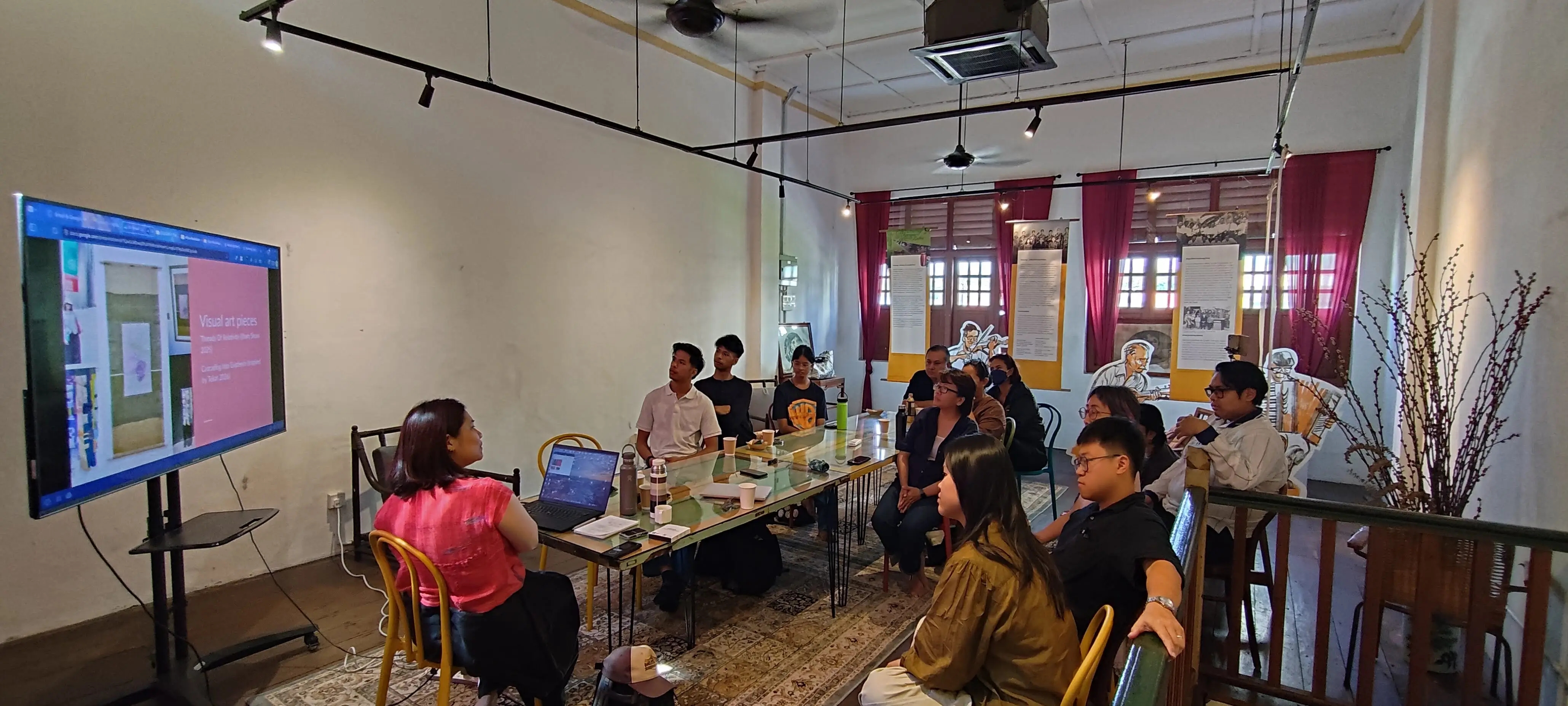
And then Afiza showed what it looks like in practice
After my portion, my wife Afiza Abubakar took the floor — and she made everything I'd said concrete. Where I talked in metaphors, she stood up as a living example: a textile artist who has been weaving since 2013 and exhibiting across Japan and Malaysia since 2019.
Her framing was the perfect bridge. Am I a small business? Yes — an artist is a small business run by one person, with real products (art pieces, exhibitions, workshops, consignments) and a stack of hats to wear: creative director, maker, curator, marketing manager, PR. On the exact theme of my talk, she showed her own setup honestly: her website at magicthinking.jp, built on Squarespace as her proper "showroom" and the home she controls, with Instagram as the fast, visual way to be found — the rented stall pointing back home, exactly as I'd argued, except hers is real and running.
She was just as honest about the struggles — making content for the site and Instagram, video editing, photography, staying in touch with subscribers, and finding chances to show her work. And what actually helps in reality: having a community, a photographer friend nearby, staying curious about events, showing up when you can, and always remembering to document. She closed by turning it back to the room — let's build a Melaka community: gatherings to stay connected, collaborations across communities, and sharing knowledge beyond our own four walls. It was the best possible argument for why we were all in that room to begin with.
The evidence behind the talk
None of this is just my opinion. If you want to check the receipts yourself:
- reach is rented and websites build credibility;
- focus wins;
- consistent details rank;
- reviews are universal;
- branded search is the most valuable search;
- AI favours real, first-hand experience; and
- AI search is still a small slice of traffic today.
I've written about all of it in plain language over at kafkai.ai.
Thank you to Melissa and The Bendahari for the room and the reason to gather, to Afiza for sharing her craft alongside me, and to everyone who came, asked, and pushed back. Let's make this a regular thing — jom rancakkan Melaka.
I write a monthly newsletter on AI, marketing, and getting found online, all in plain language. If this post was useful, come join us on my monthly newsletter
Related Articles

LaLoka Labs LLC joins MAJECA
Lessons From an Onigiri Shop Pivot: A Meetup on Japan Entering the Malaysian Market
Thinking about Japan entering the Malaysian market? Success requires more than a great product; it demands a strategy tailored to local habits. Discover the honest truth behind an onigiri shop's failure and the critical market localization steps needed to thrive in Kuala Lumpur.
Techtamu #7: The Power of Global Business - Lessons from Malaysia's Tech Community
Techtamu returns with stories of resilience, global thinking, and the technical fundamentals that keep businesses alive.