
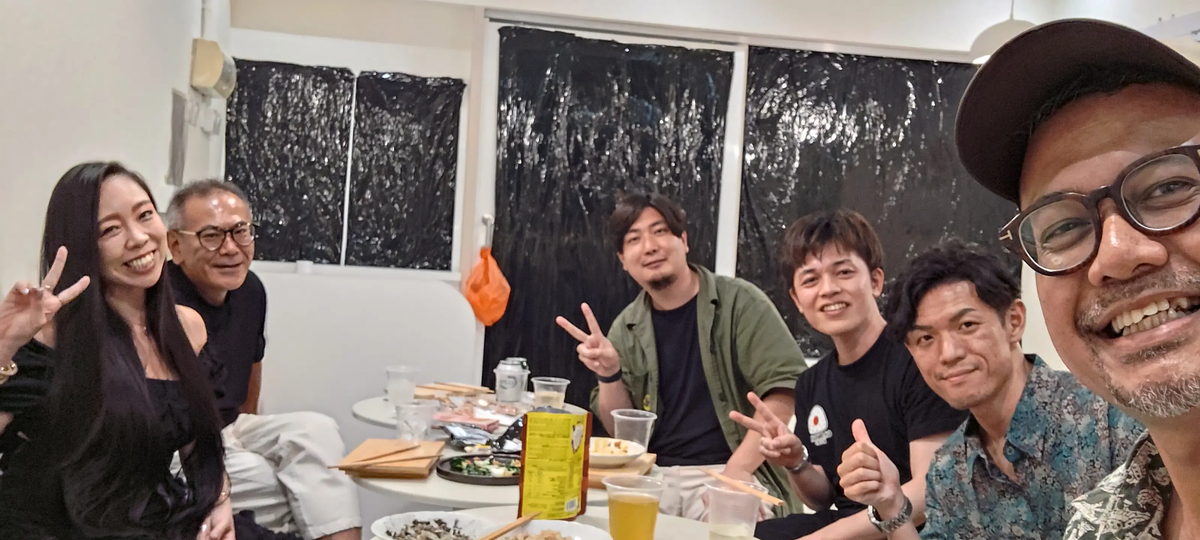
On the evening of 17 May 2026, I made my way to Bukit Bintang in central Kuala Lumpur, just behind Pavilion, to attend a small but substantial meetup hosted by Mitsu, i.e. Mr. Mitsutaka Kono (河野光孝) of Fannext, at the site of his now-closed onigiri shop, a space soon to be reborn as a ramen shop. The framing for the night was refreshingly honest. Mitsu's announcement tweet literally said he wanted to talk about "the truth and backstory behind why the onigiri shop failed, and what comes next." That kind of openness is rare, and it set the tone.
Who Was in the Room
The group was small enough to actually talk to everyone.
- Mr. Mitsutaka Kono (Mitsu): our host, founder of Fannext, now pivoting the onigiri shop to a Jiro-style ramen concept. He is featured in a recently published book about Reiwa-era entrepreneurs, a copy of which he kindly gifted me.
- Mr. Tsumita: first time in Malaysia, and his first time in Southeast Asia. He had landed only a few days earlier and was already at a meetup with strangers. That kind of energy is what I love about Japanese entrepreneurs who actually move.
- Mr. Itakura: based in Malaysia for several years, running a medical tourism business.
- Mr. Oguchi: handled event logistics and was in the kitchen running the tasting of the new ramen prototype.
- Mr. Yasumura: in KL for just a month, working remotely for a Japanese company while hunting for a place to live and a school for his children.
- A few others from Mitsu's network.
I came in as the local-ish person. Malaysian by birth, three decades in Tokyo, currently running Kafkai (a competitive intelligence platform for agencies and brands). As a side project I also run PuchiDen, a browser-based international outbound calling service, and I handed out cards for it at the event.
One conversation that stuck with me was with Mr. Yasumura, who had moved to KL only a month ago. He works remotely for a Japanese company, and he is now in the thick of the unglamorous part of relocating: hunting for a permanent place to live and, more pressingly, a school for his children. We talked through the practical realities. The trade-offs between international and local schools, the tax questions that come with having your employer in one country and your life in another, and how little of this anyone tells you before you land. He is exactly the kind of person a meetup like this exists for.
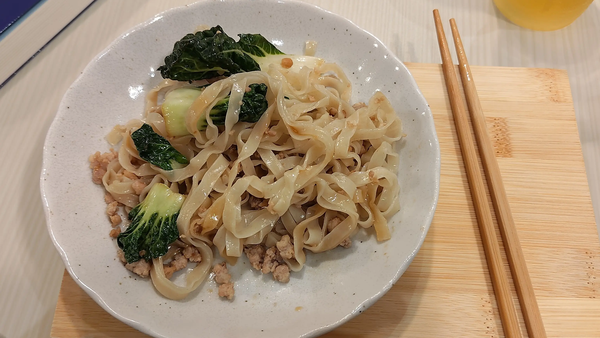
In line with the upcoming pivot to ramen, we ran a tasting of the new menu at the meetup. As the only locally-born person in the room, I was asked for my take, so I said plainly what I was thinking. What follows is a short impression piece.
The Onigiri Pivot: Why It Didn't Work
Mitsu's diagnosis of why the onigiri shop didn't take off was sharp and worth recording, because the same failure mode catches a lot of Japanese F&B entrants in Malaysia.
The shop is located in an office district behind Pavilion. The customer base during lunch is overwhelmingly bank and corporate workers. The problem: the existing food options around the area are very cheap, very fast, and customers there want to eat in, not grab-and-go. Onigiri is, by design, a takeaway product in Japan. The format simply did not fit the local lunchtime ritual.
There's a more fundamental issue underneath that. The onigiri was made the way it tastes good to a Japanese palate. The flavour profile didn't get localised. Mitsu acknowledged this candidly, and it's the single most important lesson for any Japanese F&B operator looking at Southeast Asia: the dish that works in Tokyo is not the same dish the Malaysian customer will buy twice.
The pivot to a Jiro-style ramen concept is interesting because ramen has a much higher recognition factor in Malaysia, and the unit economics of a sit-down bowl at 8-10 ringgit suit the lunchtime crowd of office workers far better than a grab-and-go onigiri. The team is bringing in a Japanese chef (interestingly, a pasta-focused chef with overseas restaurant experience) to help refine the menu over a few intensive days.
The Halal Constraint, and Why It Reshapes Everything
We spent a fair amount of time on something Japanese operators consistently underestimate in Malaysia: the religious and demographic structure of the customer base.
Roughly 70% of the market is Muslim. The moment you decide to serve tonkotsu (pork bone broth) ramen, which is what most Japanese ramen brands are known for, you have voluntarily eliminated 70% of demand. You're now competing for the remaining Chinese-Malaysian and non-Muslim share, against shops with decades of trust in that exact demographic.
The honest strategic question is: are you a tonkotsu purist willing to be a niche operator, or are you here to build a sustainable business? If it's the latter, the math says do a chicken or beef broth, get halal-certified or at least halal-compatible, and open the door to that 70%. Japan itself has plenty of shoyu and shio variants. It's basic market sizing, not a compromise on authenticity.
This is the kind of analysis Kafkai writes about often, tied to how Japanese and Malaysian startups intersect in the AI era.
Nasi Campur Is the Benchmark, Not Other Japanese Restaurants
One of the more useful framings I shared: if you're opening a lunch business in KL, your real competitor is nasi campur. A typical nasi campur lunch (rice, a protein, two vegetables, a drink) clears at 12 to 14 ringgit. That sets the price ceiling for what an office worker mentally allocates for a weekday lunch. Once you go past 15 ringgit, customers will think twice.
This anchors menu design. For a high-volume lunch operation, your bowl needs to land in the 8-10 ringgit range. For a higher ticket, you need a clear "occasion" reason. Malaysia does have grouper-tier gourmet diners, but assuming you can charge premium prices just because you're Japanese is a fast way to burn through runway.
I've opened F&B businesses here twice myself. A Western-style restaurant in Melaka for around two years, and a cafe before that. Both taught me the same lesson. Malaysian customers will pay for quality, but the price-quality goalposts are nothing like Japan's. And sourcing, especially for non-local ingredients, is a daily headache that will quietly destroy your margins.
Staff: The Hidden Killer
Another underappreciated factor: the staffing model. Malaysia's minimum wage is 1,500 ringgit per month, applying to full-time, part-time, or contract alike. You cannot really build a small cafe or restaurant on full-time Malaysian staff alone. The math doesn't work. Most small operators end up using a mix of part-timers, students, and sometimes foreign workers.
Service-industry staff retention is brutal. Once workers build a baseline of skill, they tend to move to a better-paying competitor. The cafe business is especially hard: independent shops, without the deep pockets of the chains, are in a genuinely tough spot.
What I Took Away
I had to leave after about two hours for another appointment, but I took away three things.
First, the value of being honest about failure. Mitsu could have framed the pivot as "strategic evolution." Instead, he held a meetup explicitly to talk about why the onigiri shop didn't work. That openness is exactly what the Japan-Malaysia business corridor needs more of, and it echoes the spirit you see in Malaysia's own tech community at events like Techtamu.
Second, the importance of crossing the language and cultural divide both ways. The number of useful insights that can only happen at a table with that kind of mix is unreasonably high. If you're a Japanese entrepreneur thinking about Malaysia, find your bridge person early, and pay them properly.
Third, prototype in public, eat your own prototype. Mitsu had the half-finished ramen on the table for us to taste, asked for direct feedback, and took notes. Too salty in places, too spicy in others, broth needs adjustment for the local palate. That's how products get made. Not in a slide deck.
Whether you're a founder in Japan looking at Malaysia, or an operator in Malaysia looking at Japan, feel free to reach out.