Published in Marketing
Traffic Is Nice, but Trust Is What Converts


Here's the uncomfortable truth behind most marketing dashboards: traffic is easy to buy, easy to measure, and mostly irrelevant on its own. The average e-commerce conversion rate is under 2%. That means 98 out of every 100 visitors leave without buying. Traffic gets people to the page. Something else entirely determines whether they act.
That something is trust.
The Trust Gap That Most Companies Miss
90% of executives believe their companies are highly trusted by customers. Only 30% of customers agree (Edelman/Qualtrics, 2025).
That gap — 60 percentage points between what companies think they've earned and what customers actually feel — is where conversions die, where churn begins, and where marketing spend quietly evaporates. Most businesses optimize for visibility. Very few optimize for the thing that turns visibility into revenue.
And the stakes are significant. 81% of consumers won't do business with brands they don't trust. 89% say they would end a relationship with a brand after a single trust violation. Trust isn't a soft metric. It's the foundation every other metric sits on.
What Trust Actually Does to Revenue
When customers trust a brand, behavior changes in measurable ways:
- 87% of consumers will pay more for products from brands they trust (Salsify, 2025)
- Trusted retailers see customers spend 51% more per transaction (Forter, 2024)
- 67% of consumers say trust is required to continue purchasing from a brand (Edelman)
- Companies that establish digital trust leadership see at least 10% annual revenue growth — consistently
- Ecommerce sites can achieve a 35.26% improvement in conversion rate through trust-building elements like reviews, security signals, and transparent policies (Baymard Institute)
These aren't marginal improvements. A 35% conversion rate lift on existing traffic would be transformational for almost any business — and it doesn't require a single additional dollar of ad spend.
Why Traffic Alone Fails
Traffic without trust has a predictable pattern: high acquisition cost, low conversion, high churn, poor lifetime value. The math rarely works out.
Paid advertising generates immediate visibility, but it can't manufacture credibility. Only 39% of consumers trust digital ads to be truthful. Clicking an ad and trusting the brand behind it are entirely different things, and companies that confuse impressions with relationship-building end up spending more and more to drive traffic that converts less and less.
There's also a retention problem. Acquired customers who aren't emotionally invested in a brand are one bad experience away from leaving — and it takes twice as many positive experiences to rebuild trust as it takes negative ones to break it. Winning customers through volume and losing them through distrust is an expensive treadmill.
What Actually Builds Trust
Consistency Over Time
Trust is built by repeatedly doing what you said you'd do. That sounds simple. It's the thing most companies fail at, not through malice but through operational inconsistency — product quality that varies, delivery promises that slip, support experiences that contradict brand messaging. 73% of consumers are more loyal to brands they perceive as authentic, and authenticity is almost entirely demonstrated through consistent behavior, not messaging.
Transparency About Everything Uncomfortable
Pricing, data practices, mistakes, policies — consumers increasingly expect honesty even when it's inconvenient. 65.8% of customers gain trust in a company that's transparent about how their data is collected and used. Conversely, 40% of people have switched brands after learning that a business didn't properly protect customer data.
Transparency is particularly powerful with younger audiences. Gen Z places 2.7x more weight on brand values and actions than older generations — and they're significantly better at detecting when a company's stated values don't match its behavior.
Social Proof That's Credible
79% of consumers trusted online reviews as much as personal recommendations — though that number has shifted as review skepticism grows. What remains consistent: peer validation matters enormously, and brands that make it easy for satisfied customers to share their experiences compound trust far more efficiently than any branded content campaign.
User-generated content delivers around 400% ROI (Bazaarvoice/Forrester). Not because it's cheap to produce, but because consumers find it credible in a way that polished brand content simply isn't.
Data Security as a Trust Signal
75% of consumers won't purchase from companies they don't trust with their data (Cisco, 2024). Security isn't a backend IT concern — it's a conversion factor. Visible trust signals at checkout (security badges, clear privacy policies, familiar payment options) directly impact whether people complete purchases. 19% of shoppers abandon carts specifically because they don't trust the site with their credit card information (Baymard Institute).
The Metrics Worth Tracking
Traffic metrics are easy to pull and easy to misinterpret. Trust is harder to measure but more directly tied to outcomes. The indicators worth watching:
Net Promoter Score (NPS) — willingness to recommend is one of the clearest behavioral signals of genuine trust, not just satisfaction.
Customer Retention Rate — repeat purchase behavior reflects trust more accurately than any survey question.
Referral rate — trust customers bring other customers; tracking the volume and quality of referrals reveals the depth of brand loyalty.
Review quality and recency — not just star ratings, but the specificity and authenticity of what customers actually write.
Churn reasons — understanding why customers leave is often more instructive than knowing how many do.
Three Brands That Make the Point
Apple has sustained premium pricing in a market saturated with cheaper alternatives for decades. The product matters, but the trust infrastructure matters more: consistent design language, reliable software updates, clear privacy commitments, and customer service that reinforces the brand promise. Apple customers aren't just buyers — they're advocates who evangelize to their networks at no cost to Apple's marketing budget.
Zappos built its business model around trust so explicitly that the company's famously generous return policy — free shipping both ways, 365-day returns — was designed to eliminate purchase anxiety entirely. The bet was that removing risk would create loyalty worth more than the cost of the policy. It worked.
Patagonia has perhaps the most durable trust positioning of any consumer brand: environmental commitment that's structural rather than superficial, supply chain transparency, and repair programs that explicitly extend the life of products. Customers pay a premium and defend the brand publicly. That kind of advocacy doesn't come from advertising — it comes from earned conviction.
The Bottom Line
Traffic is the start of a conversation. Trust is what determines whether the conversation becomes a relationship.
A business can survive on traffic. It can grow on trust. The two require different investments, different metrics, and a different orientation toward customers — from people to be acquired, to people to be genuinely served.
The brands that understand this aren't just winning conversions. They're building something that compounds over time: a reputation that lowers acquisition costs, raises lifetime value, and turns customers into the most effective marketing channel a company can have.
Statistics sourced from:
- Salsify 2025 Consumer Research
- Edelman Trust Barometer 2025
- Baymard Institute Ecommerce Research
- Forter Consumer Trust Report 2024
- Cisco Data Privacy Benchmark 2024 and Cisco 2024 Consumer Privacy Survey
- Bazaarvoice/Forrester Total Economic Impact Study
- Statista E-commerce Benchmarks
- Boston Brand Media — The State of Brand Trust in 2025
Related Articles

Digital Ads Still Work, But Organic Influence Wins the Long Game
AI-Powered Marketing: Trends in 2025
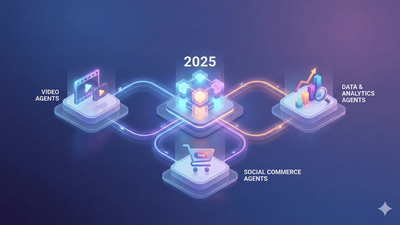
As we close out 2025, AI-Powered Marketing has shifted from buzz to meaningful business integration. Autonomous AI agents now perform complex tasks, while hyper-personalization delivers unique customer journeys. Discover the top ten trends shaping this new era of intelligent marketing.

DMS25 Final Part: AI-Powered CRM Marketing Strategies - Data-Driven Success
This final DMS 2025 Seoul report explores AI-powered CRM marketing strategies that leverage data for personalized customer engagement, optimal messaging, and predictive analytics—with practical takeaways for businesses of any size.