
I was honored to be invited to speak at the IT Expert Seminar and Sharing, Universiti Kebangsaan Malaysia (UKM), also known as SEKOPI UKM. This event was organized by the Information Technology Center at UKM and brought together ICT practitioners from all over UKM, as well as from outside UKM.
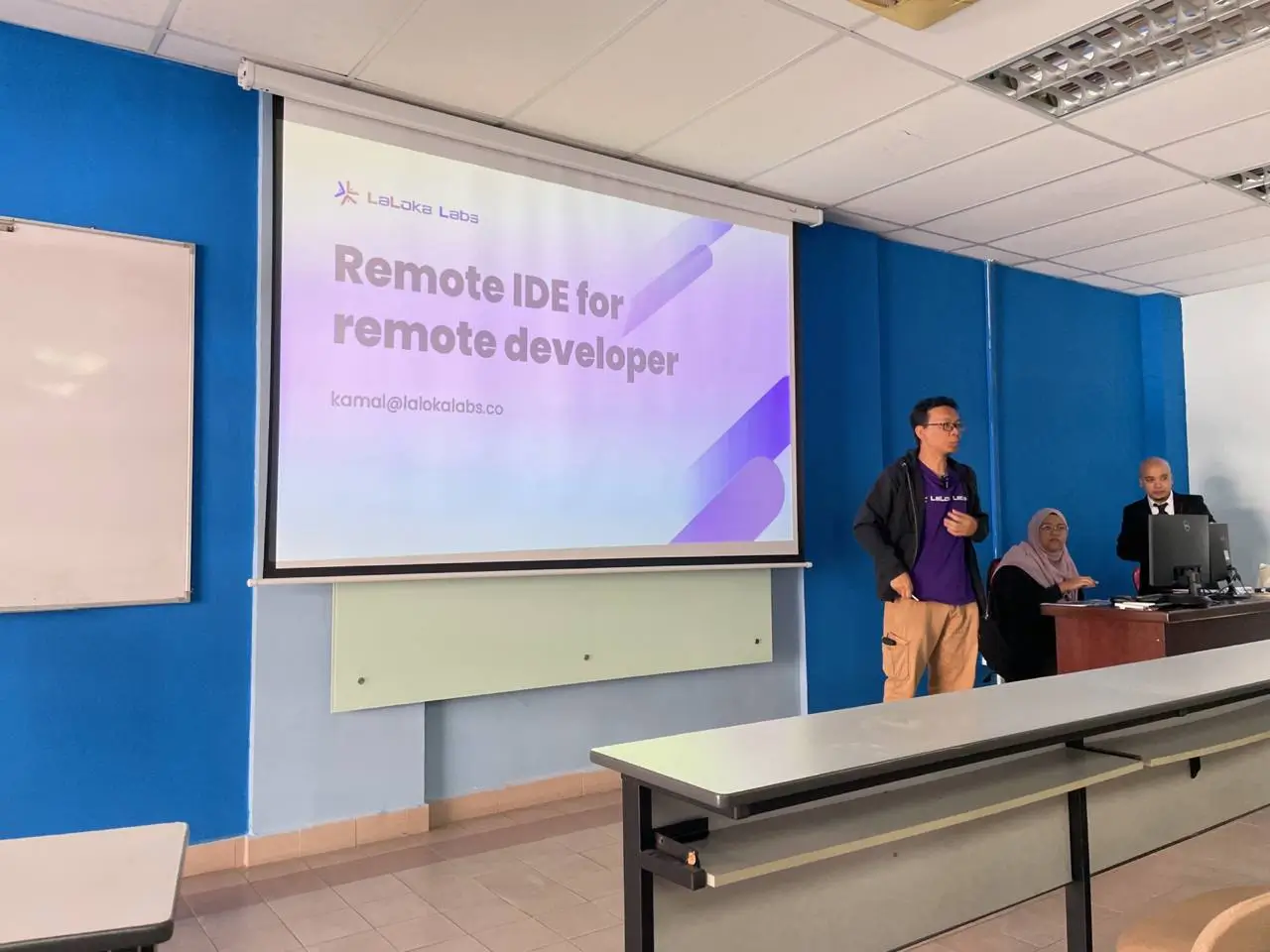
My talk was on Remote IDE, in which I explained what it is and why we use it. I shared my personal experience with Gitpod, which I have been using for some time now and find to be an excellent tool. I also talked about how I had tried Github Codespaces before but had switched to Gitpod because it is much cheaper.
I shared my experience with remote Integrated Development Environments (IDEs) and why they are becoming more popular among developers. Remote IDEs are essentially cloud-based development environments that allow developers to work from anywhere as long as they have an internet connection. They offer many benefits, such as a consistent development environment, faster setup time, and access to powerful cloud-based computers.
I explained that using remote IDEs like Gitpod can significantly improve the developer experience by providing a ready-to-code environment, one-click setup, multiple projects support, and access to powerful cloud-based computers. This means developers can quickly get started with their projects without worrying about setting up their development environment, which can be a time-consuming task.
After my talk, I had the opportunity to attend two other talks. The first was on design systems, where I got introduced to storybook js. Storybook is a user interface development environment and playground for UI components. It enables developers to build UI components in isolation so they can be tested and shared more easily. I found it to be a great tool for creating and documenting reusable UI components.
The second talk was by Dino, who discussed how he is using Bootstrap Studio to quickly design mobile apps. It was impressive to see how he managed to clone TnG and LinkedIn mobile apps using this software. I learned a lot from this talk and was inspired to use Bootstrap Studio in my work as well.
During lunch provided by the organizers, I had the chance to catch up with some old friends who were also speaking at the event. It was great to see them again and learn about what they have been working on.
Overall, SEKOPI UKM was an excellent event, and I was grateful for the opportunity to speak and learn from others in the industry.