Published in Tech Community
Building Community, One Data Project at a Time: My brunch with Wanita Data

Date: Sun, 2025-10-14 11:30
Location: Outreach Coffee, Bukit Bintang
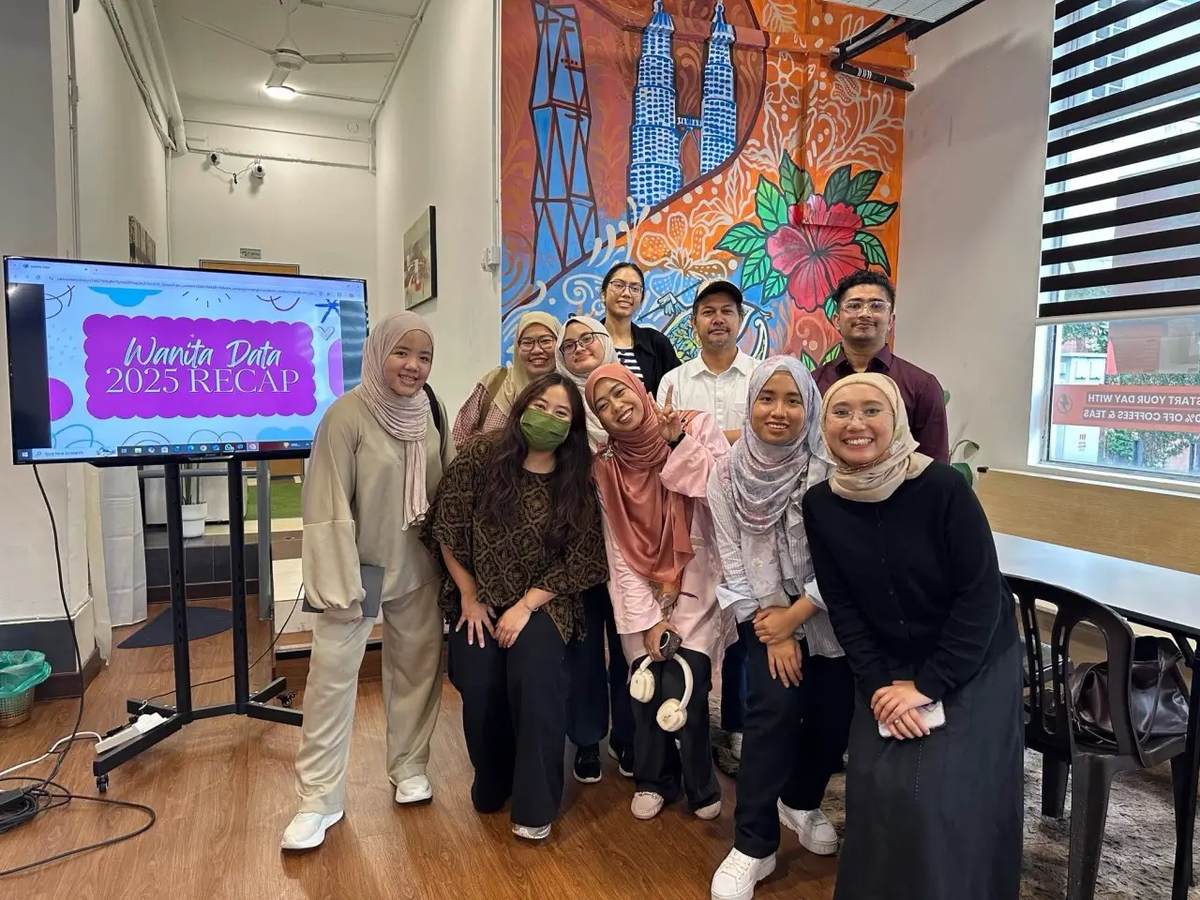
Last Sunday, I found myself at Outreach Coffee near MRT Bukit Bintang, joining a group of people recapping their community work for 2025.
Wanita Data, from fresh graduates to mid-career pivoters to seasoned analysts, were exchanging news, comparing notes on, and genuinely celebrating each other's wins. This was Wanita Data celebrating two years of creating space for women in Malaysia's data community.
For those unfamiliar, Wanita Data exists to do something deceptively simple: empower female professionals to break into data careers through knowledge sharing, hands-on learning, and building a safe collaborative space. Their broader mission? Increase visibility and representation of Malaysian women in data fields, both locally and globally. The kind of mission that makes you wonder why it took until 2023 for someone to start it.
The Numbers That Matter
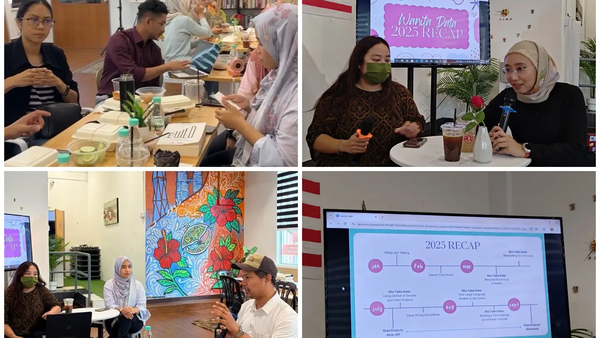
Elissa Irhamy one of the lead organizers started with the first session recapping Wanita Data's year.
The 2025 stats tell one story: 537 total registrations across in-person and virtual events, with over 50% being first-timers. A 4.7 out of 5 satisfaction rating which is impressive even for any tech community, let alone one building from scratch in a market where women in data still fight for recognition.
But personally this is what I was most interested with: their Data Projects initiative. From July through September, seven teams tackled real-world datasets from the Department of Statistics Malaysia and Google. Not toy problems. Real housing market data. Actual water consumption studies. Waste disposal analytics that could inform municipal policy. I actually joined online their presentation day for the real housing market data team.
Eighteen participants in beginner teams learned Python or SQL from scratch. Thirteen intermediate teams sharpened their analytics skills. What stood out? 100% of beginner participants reported they can now use the tools they learned. Not "feel more confident." Not "understand the concepts." Can use the tools.
I am often asked by members of our tech community on where or how to get started on something. Well here's one way you can start, from analyzing real data: Real-world data makes projects meaningful as opposed to some project which you found on GitHub. When you're analyzing actual Kuala Lumpur housing prices or Selangor water usage patterns, suddenly those abstract concepts about data cleaning and visualization have weight.
From Politics to Creative Tech: The Fireside Chat That Actually Fired People Up
The next session featured Suhaila Yunus, founder of Fleur Babes, shared her pivot journey with Jamalina leading the discussion and takinh Suhaila through her experience.
Suhaila started in politics and public policy, working ministry roles where she noticed something critical: a gaping lack of data-driven decision-making in policy work. Not a minor gap. A fundamental blind spot where billion-ringgit decisions were made on gut feelings and political calculus instead of evidence.
Her realization? If you see the gap, you have two choices: complain about it or fill it yourself. She chose to fill it, eventually founding her own creative tech venture.
What resonated in the room wasn't just her career change. It was the recognition that identifying a gap is often the first step toward filling it yourself. In Malaysia's tight-knit professional circles, where family expectations and traditional career paths still weigh heavily, her story gave permission to pursue the unconventional.
What Hiring Managers Actually Look For
Elissa came back and led the final part of the meetup as the career advice segment.
On resumes: Yes, hiring managers really do spend less than 30 seconds on initial resume reviews unless something catches their attention. What makes resumes stand out? Links to portfolios with clear navigation guides, specific details about projects (which libraries used, which languages, concrete numbers), and evidence of actual work done. One tip that resonated: if your GitHub is overwhelming with dozens of projects, organize it well by putting your best work front and center with clear README files.
On qualifications: The room erupted when Emisa confirmed what research suggests: women hesitate to apply when they don't meet every single requirement, while men apply with 60% qualifications. Her advice? "We don't need everything to be ticked. We usually look at potentials more than if you've done all of that." She shared a story of having to convince a highly qualified candidate to apply despite missing two bullet points. That candidate turned out to be more qualified than most applicants.
On communication skills: The most common rejection reason after meeting technical requirements? Poor communication during interviews. Not being able to clearly explain your work and projects is a red flag, since you need to communicate with leads and stakeholders constantly. The advice: practice by recording yourself, talking to a mirror, or as one participant put it, "torturing your friends" with mock interviews.
Grassroots Hiring: Why Community Participation Actually Gets You Jobs
I shared my own experience running a business for 20 years with my own approach: We did only three job advertisements in two decades.
Why? Traditional job ads didn't work, at least for a small company like us. We'd get 100 resumes, shortlist to 10, and only three would respond. Many were clearly bots. It was inefficient and yielded poor results and the worst part it demoralizes the team having to sift through all of that.
Instead, I've built teams through what I call "grassroots hiring" at open source conferences like PyCon. I look for people giving lightning talks, the five-minute presentations, regular talks, or folks running workshops, which shows that they are actively participating in the community. The approach is direct: walk up to someone whose work resonates, and I ask if they're interested in joining the team.
Elissa echoed this, sharing that she hired a talented engineer from a Wanita Data event who's now been with her team for nine months. They'd connected on Twitter first, then met in person at the event, and the combination of online presence and community participation made the hiring decision straightforward.
The philosophy I shared: "If we do it right, the job will look for us." Being active in open communities, sharing knowledge through talks and workshops, contributing to projects—these activities create organic opportunities that traditional job applications simply can't match.
For those in hiring positions, I made a direct ask: consider this grassroots approach. Even though it's not the corporate standard, it works. For job seekers: your presence in communities like Wanita Data isn't just about learning—it's infrastructure for your career.
The AI Resume Question Everyone's Actually Asking
The discussion then shifted to another hot topic:
One topic dominated: how to handle AI-powered resume screening and whether to use AI tools for resume crafting. The discussion revealed a practical approach:
The AIM Method for Prompting:
- Actor: Tell the AI what role to play
- Input: Provide specific information
- Mission: Define what you need it to do
The consensus? Use AI to enhance language and vocabulary, but never let it fabricate numbers or experience. One participant shared she'd seen ChatGPT invent statistics on resumes, a reminder that AI tools are assistants, not replacements for authentic representation.
Basically when you write your prompts, be specific: Instead of "build me a resume," try "I want to write this for my work experience portion. Can you rephrase this text using resume language in one or two sentences?"
What's Next: 2026 and Beyond
Looking ahead, Wanita Data plans to:
- Elevate events toward larger signature initiatives (hackathons are on the table)
- Continue hands-on learning through workshops and project-based sessions
- Explore next-generation topics like AI and data sustainability
- Position themselves as key advocates for women in data specifically in Malaysia
The community angle remains central. While others chase scale through pure digital reach, Wanita Data understands something crucial: in a field where women remain underrepresented, having a dedicated space to learn, fail, and grow together matters more than viral content.
The Community Angle: What I Actually Saw
As usual when I join community events, the best part is always watching participants exchange Discord handles, discuss career transitions, and genuinely support each other's journeys. But this time, the grassroots hiring discussion added a new dimension: community participation isn't just networking—it's career infrastructure.
I also managed to share some of my thoughts on how to build and keep communities sustainable. Like many other new communities, Wanita Data is still top-down led where there are more passive members than active ones. If this continues for long, we'll get burnouts, so an important issue which needs to be addressed is having a reason for community members to stay and contribute on their own, creating a virtuous cycle that can outlive any individual community member. I hoped what I shared will prove useful to Wanita Data.
In Malaysia's data ecosystem (and this is generally the same everywhere), where women still navigate unconscious bias, imposter syndrome, and the pressure to prove they "belong", having a dedicated safe space to be vulnerable and technical simultaneously is rare.
The combination of technical skill-building, real hiring opportunities through community presence, and peer support is what makes Wanita Data work. It's not just about learning pandas or SQL: It's about creating pathways where more women can see themselves thriving in data careers—and where that five-minute lightning talk might lead to your next job.
Interested in joining future Wanita Data events? You can connect with them here and someone can invite you to their Discord community. Their next projects and meetups are already in planning. And if you're building community in tech, take note: the magic isn't in the content alone. It's in the space you create for people to become the professionals they couldn't be elsewhere. And sometimes, it's in showing up at conferences, giving that talk you're nervous about, and discovering that the job you want is looking for you too.
Sometimes I write about events like these because they're where real change happens, not in press releases, but in kopitiams where someone says "I've been struggling with this too" and suddenly, they're not struggling alone. And sometimes, they're where careers change because someone walked up and said "your work is interesting, want to join our team?"
Related Articles
Ubuntu Summit 25.10 Extended – Namibia
Ubuntu Summit 25.10 Extended in Namibia brought together students, developers, and open-source enthusiasts to learn, connect, and grow the Ubuntu community through live talks, workshops, and shared experiences.
A First-Time Speaker’s Reflection on PyCon Indonesia 2025
Wondering what it's like to be a first-time speaker at a major Python conference? This honest reflection on PyCon Indonesia 2025 reveals the real challenges: from visa nightmares to technical disasters and the community that makes it all worthwhile. Let's dive in.

First Claude Code KL Community Meetup in Malaysia
A short write-up on Malaysia's first ever Claude Code community gathering